Medical Latin began to be surprisingly missed by the general medicine students rather quickly. Two semesters in the first year, concluded with an exam, were just enough to spark their interest and hunger for more knowledge. As a way to say goodbye to Latin classes and thank their teacher, Dr. Pořízková - and partly to celebrate the start of a new semester - the students decided to visit Rome. Thus, they combined the pleasant with the useful; historical sites brought to life ancient words about medical practices and the knowledge that shaped later medicine.
It all started quite innocently during a regular Latin class, when our teacher, Dr. Kateřina Pořízková, began her lecture with the words: "Now I would like to invite you to Rome…" to capture our attention. Little did she know we would take her literally and turn this phrase into a real excursion to summer Italy, steeped in antiquity.
Unfortunately, due to flooding at the beginning of the last academic year, we missed a captivating lecture on the history of medical terminology. This excursion certainly made up for it and gave us the chance to witness firsthand the use of Latin in the ancient medical environment.
The excursion program was rich and offered the young medics a different view of Latin studies. Related sciences were not neglected either. Each participant was required to choose and explore a topic connected to the traces of ancient medicine in Rome using research-based learning. This involved finding suitable sources and preparing an activity for the group—whether a presentation, discussion, or educational game. There was no time for idleness—the packed program was barely enough.
Day One – Catacombs, Baths, and the Colosseum
The very first day was packed to the last minute. Our journey through antiquity began near the Via Appia Antica, in the Catacombs of St. Callixtus. This early Christian burial site, dated to the 2nd century by archaeologists, not only reflected historical and architectural dimensions but also illustrated the development of respect for the dead and spatial burial concepts.
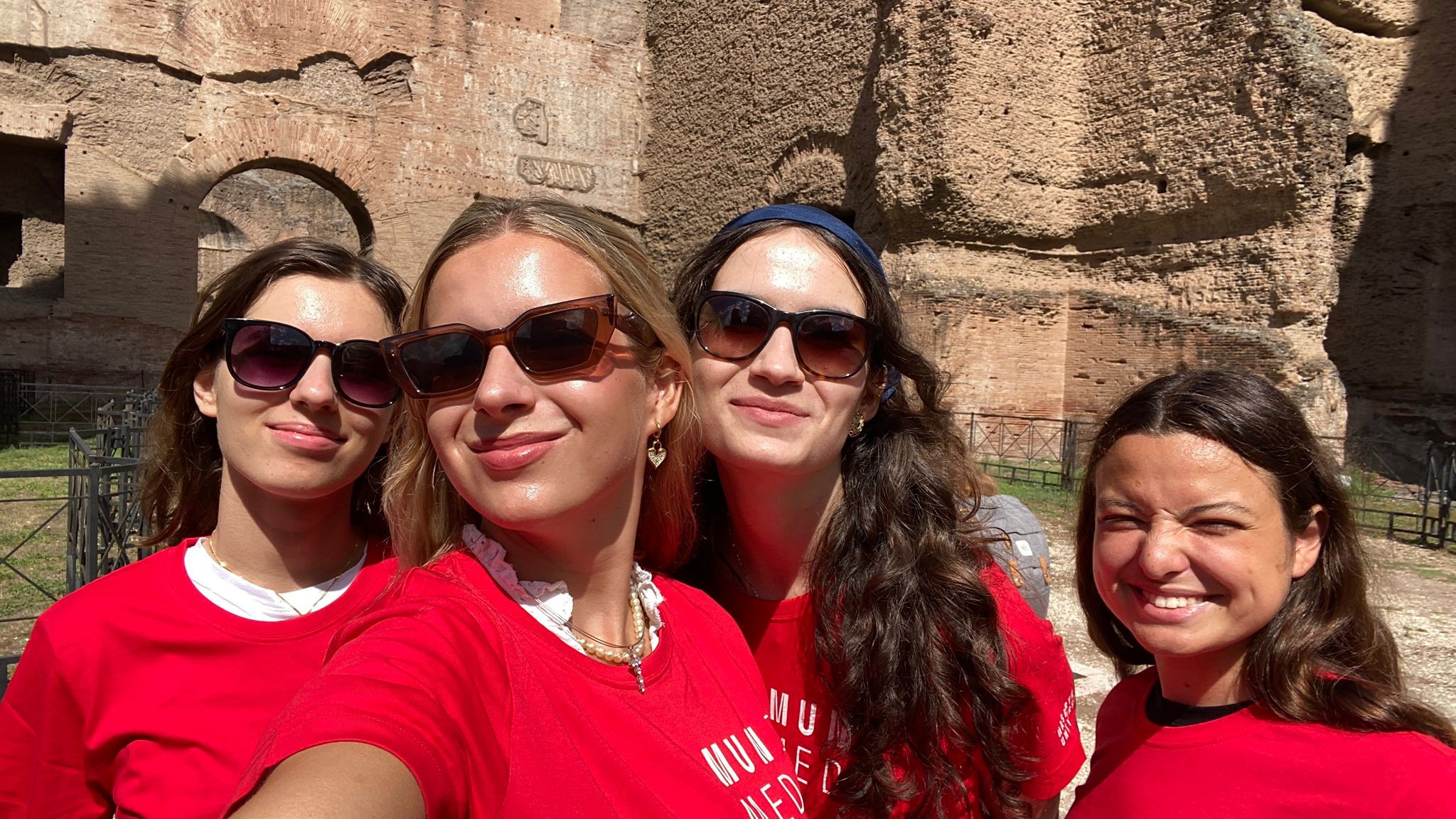
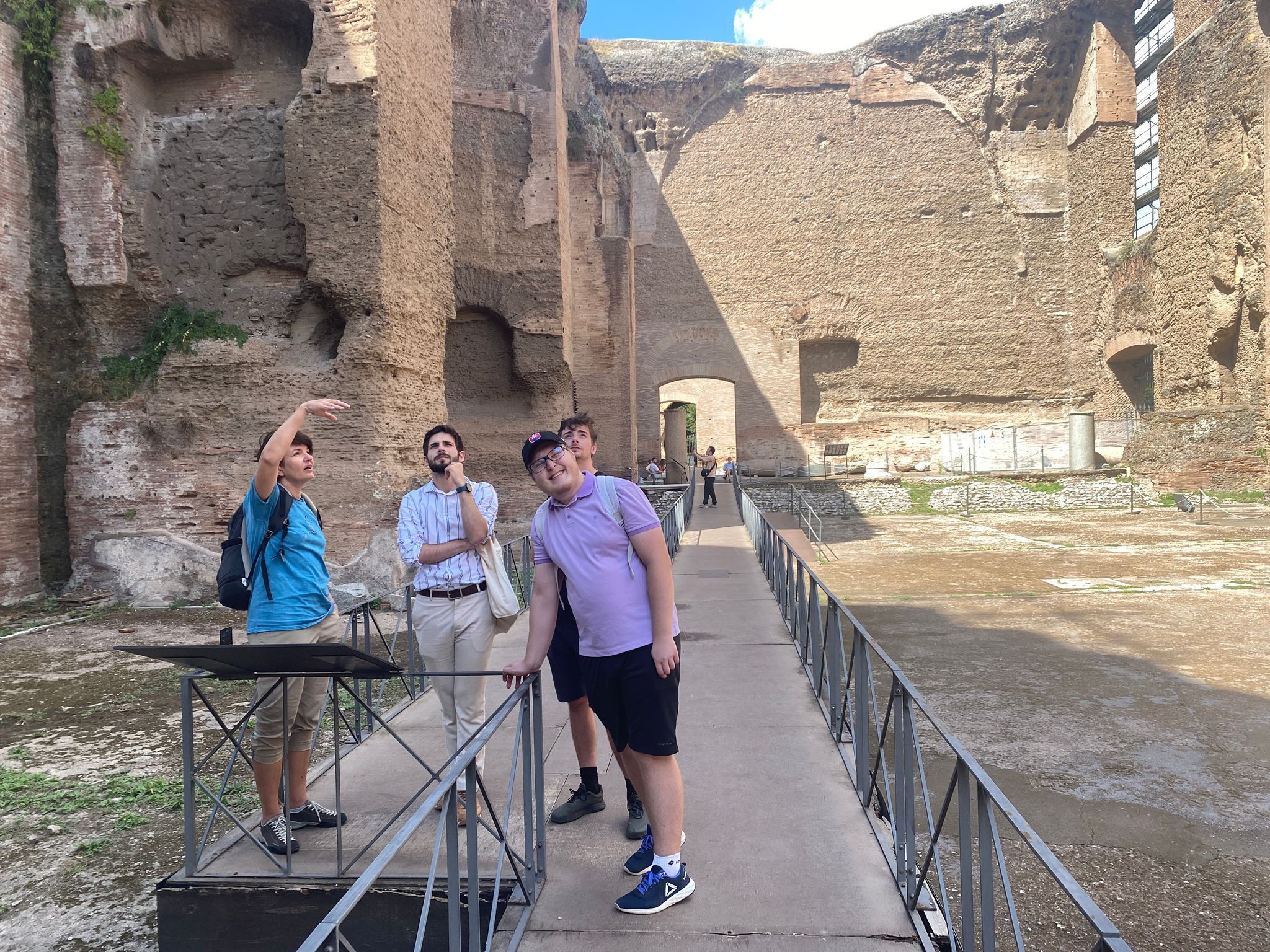
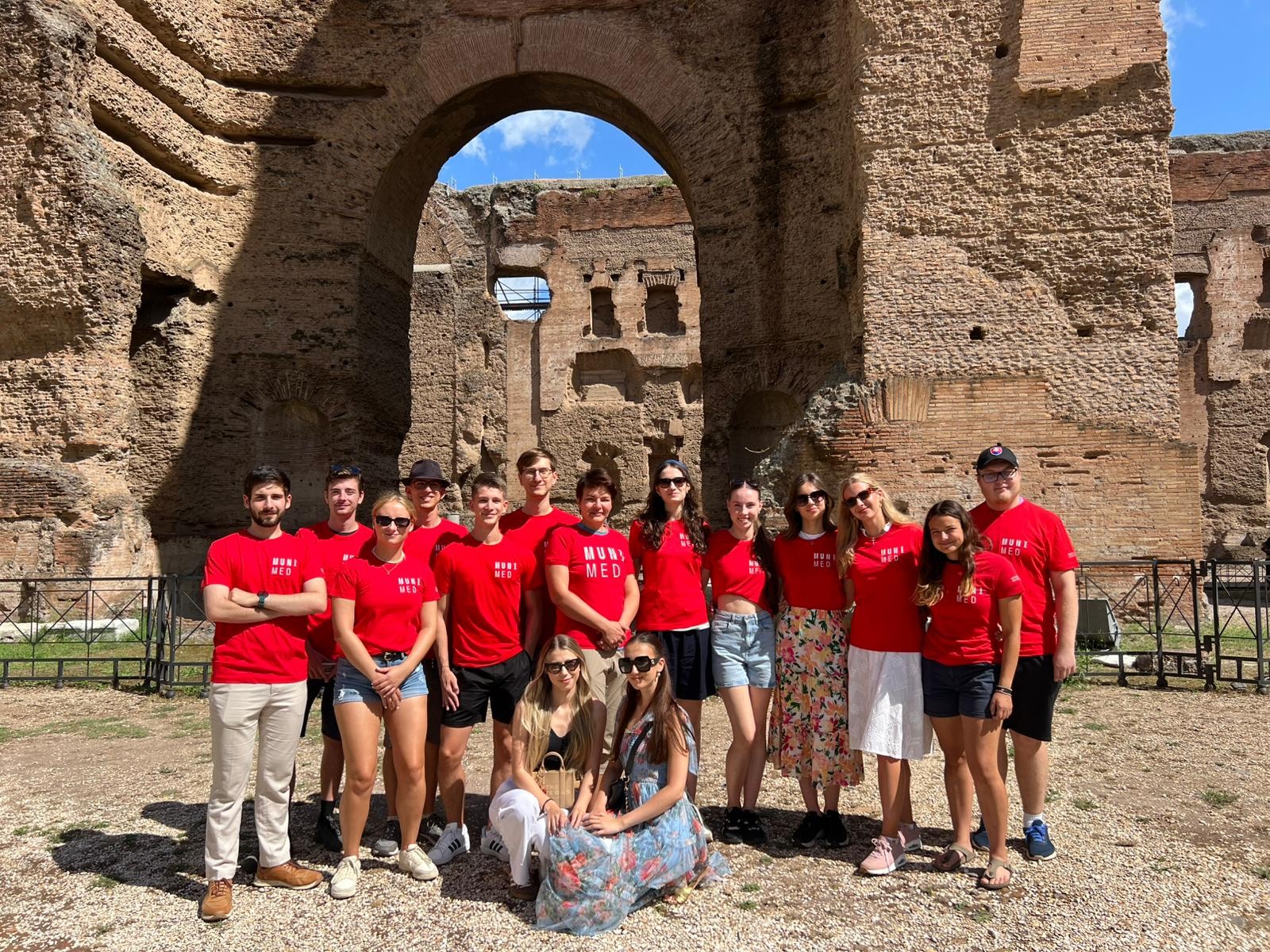
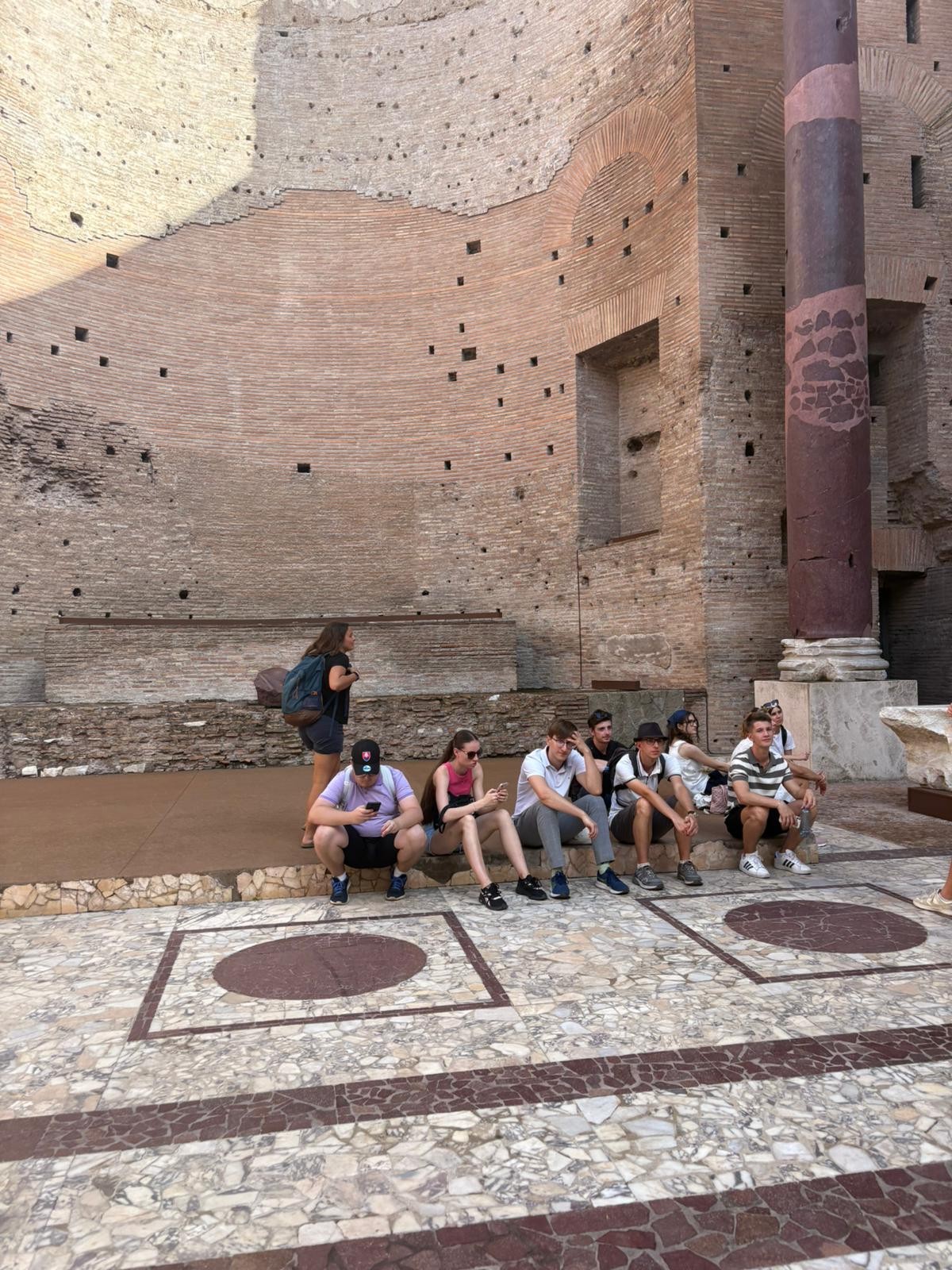
Next, we visited the Baths of Caracalla. Through interactive learning, we learned about their purposes. Romans visited them for a wide range of reasons—from playing games to conducting political and economic meetings. Primarily, however, they served as an ancient form of what we now call social medicine. Due to the accessibility of these baths, most of Rome's population maintained a high level of hygiene, preventing many diseases. The architectural grandeur of the bath spaces is also worth mentioning.
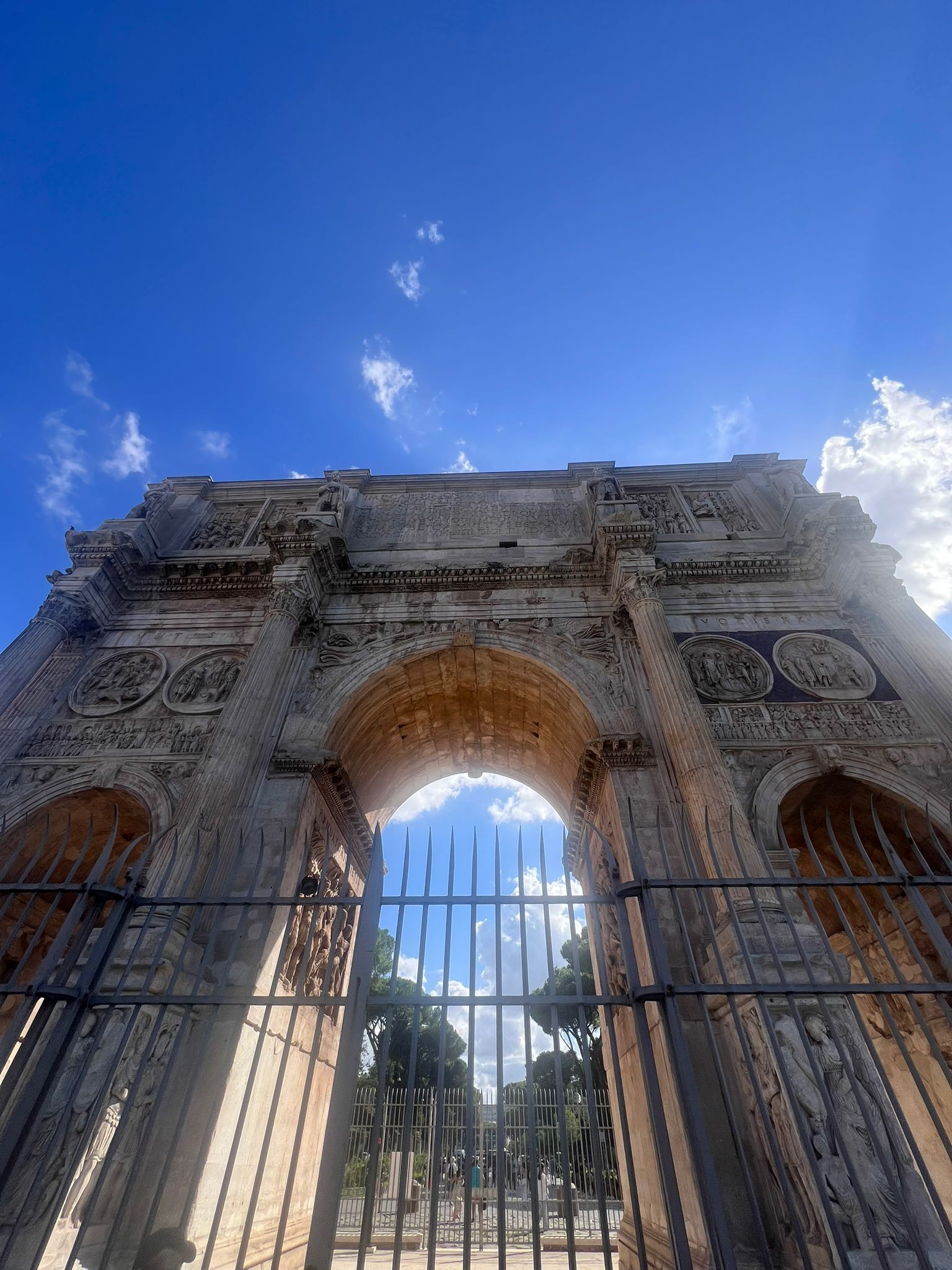
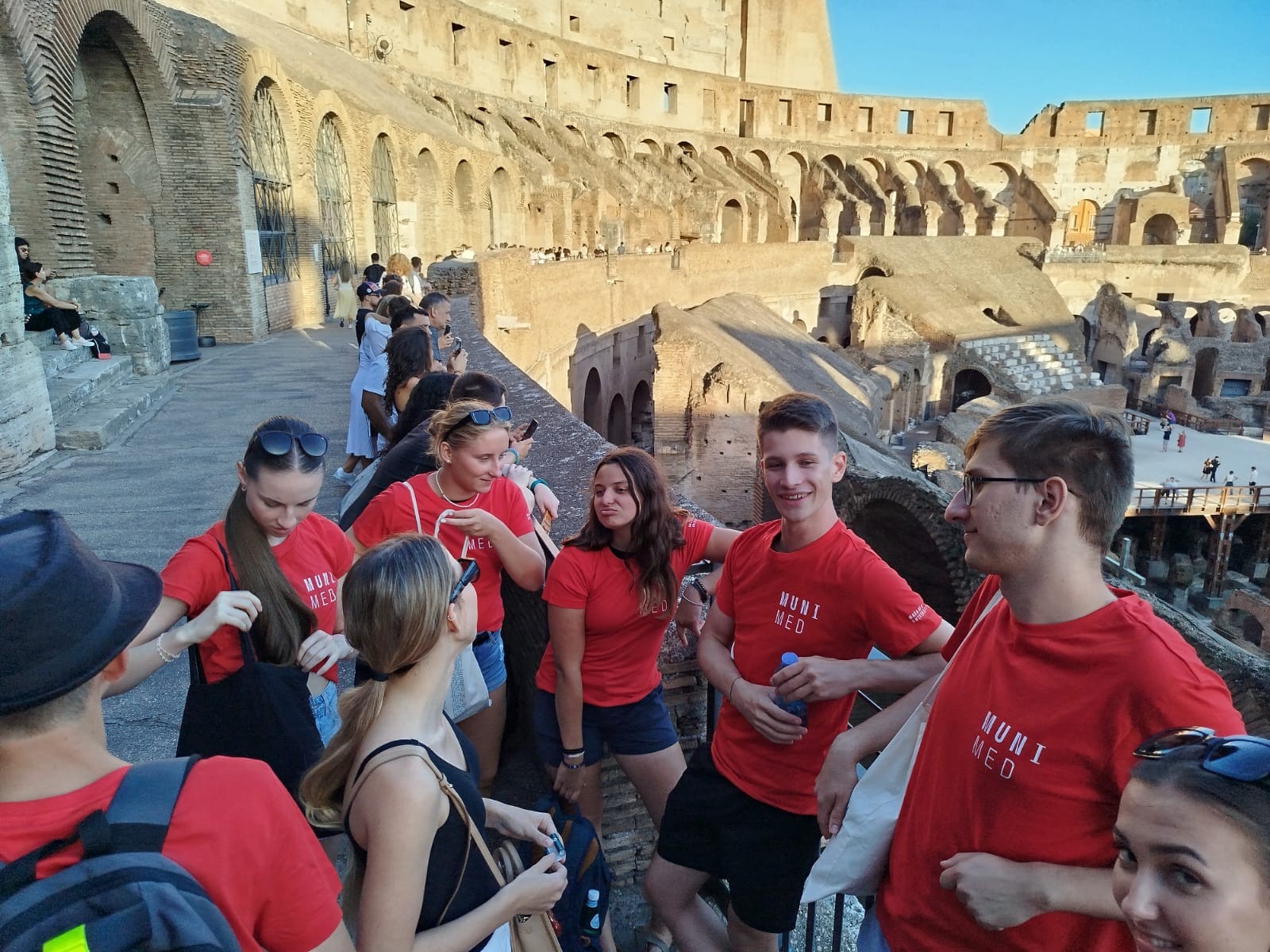
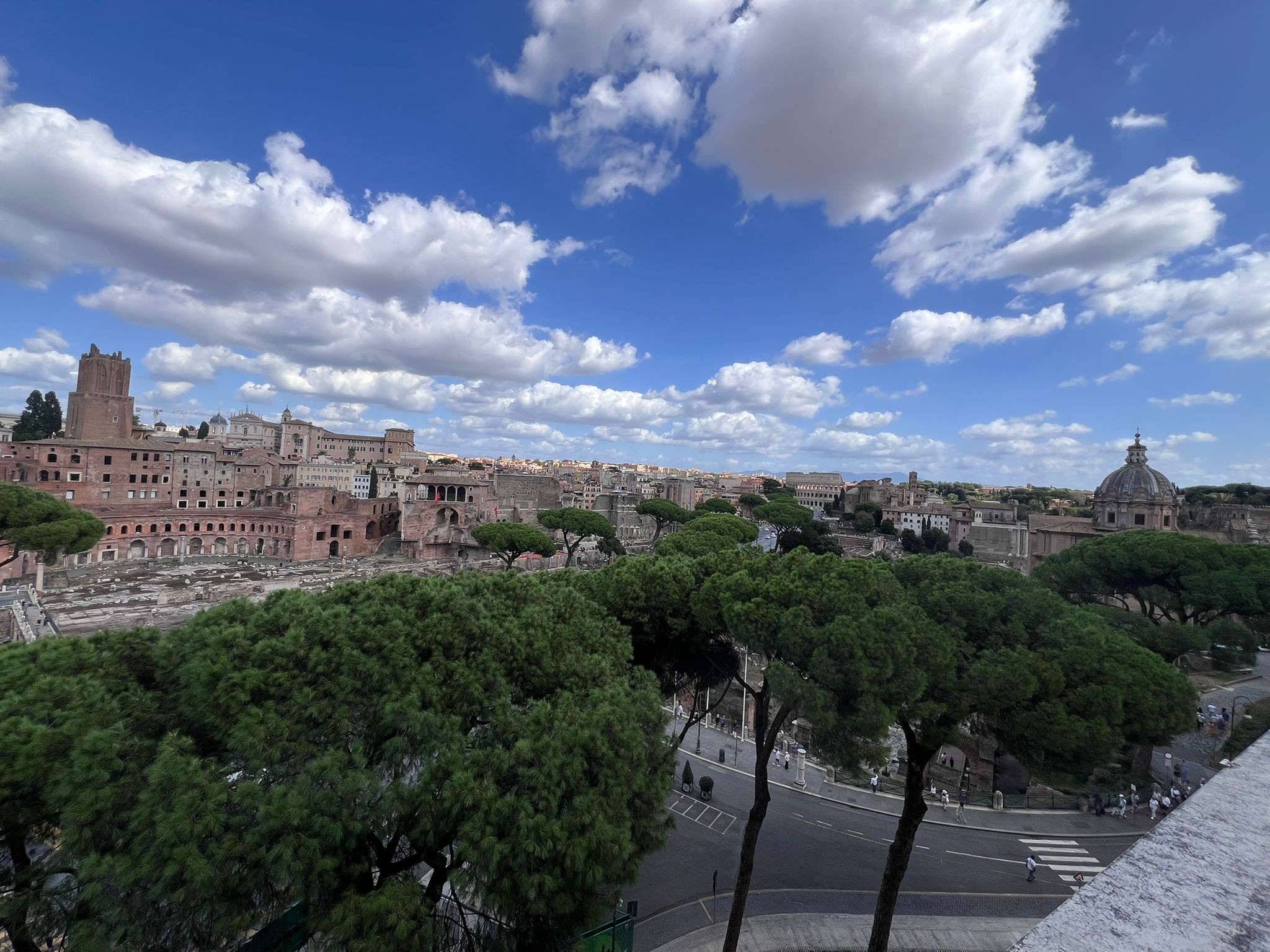
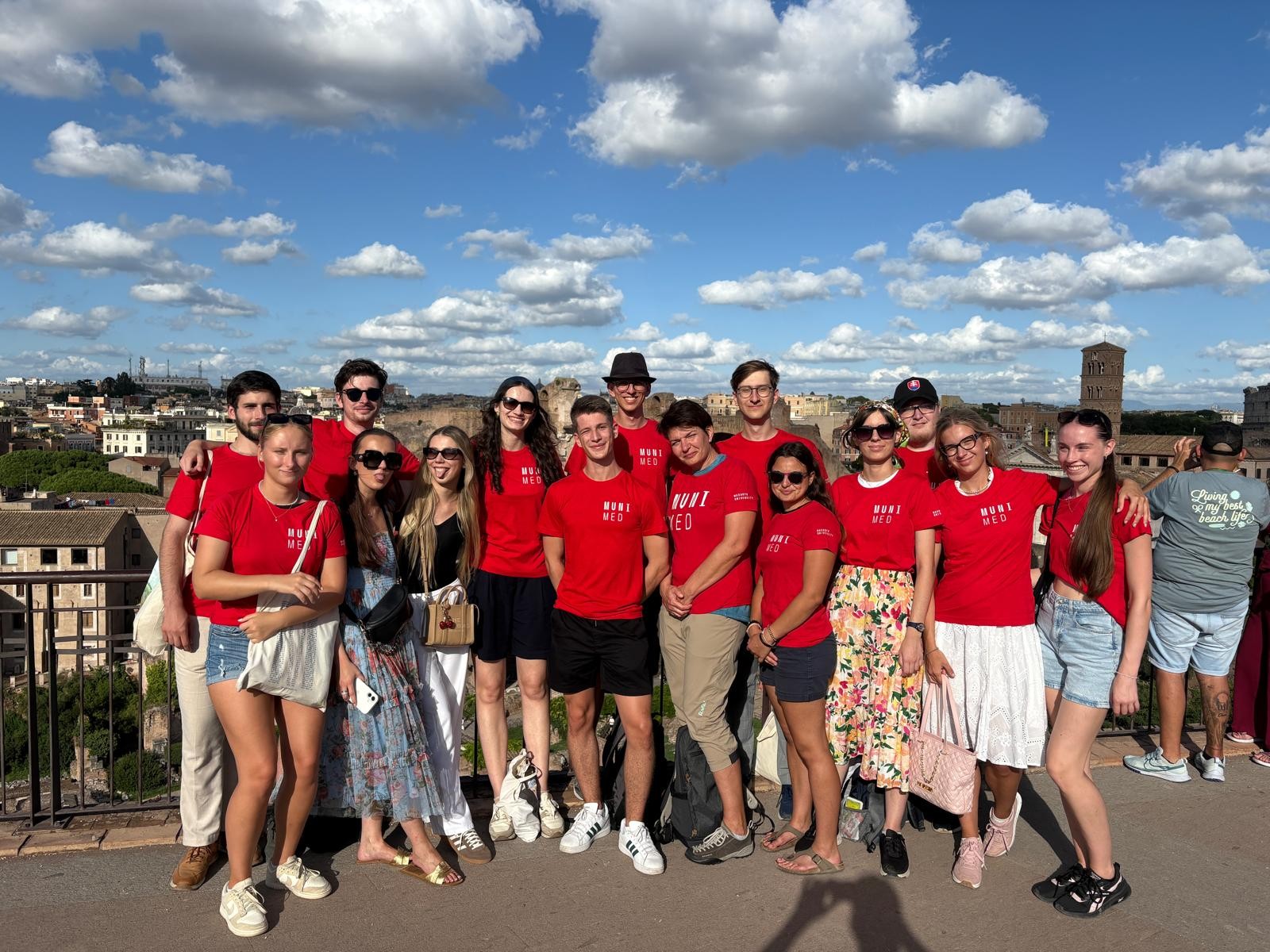
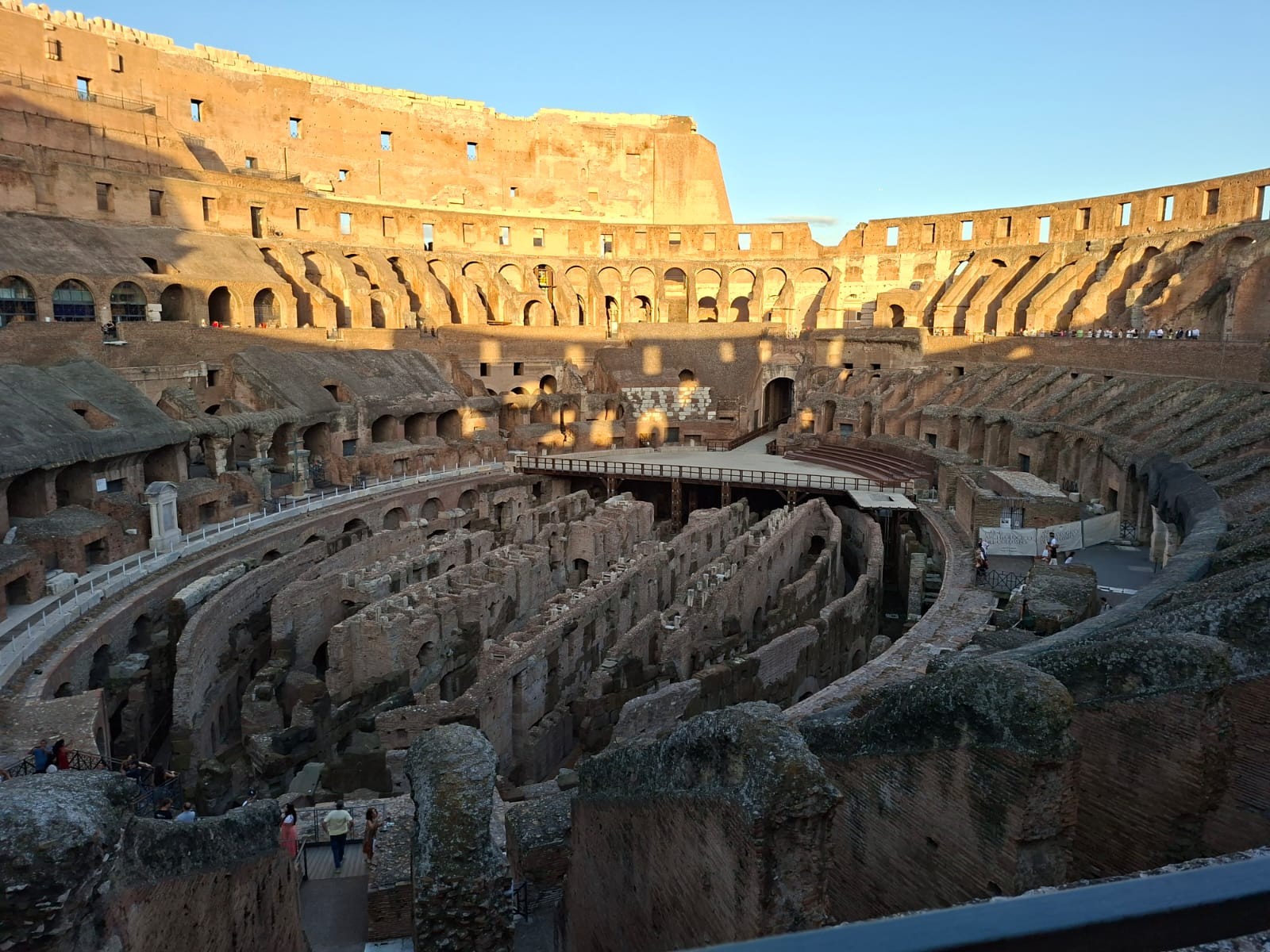
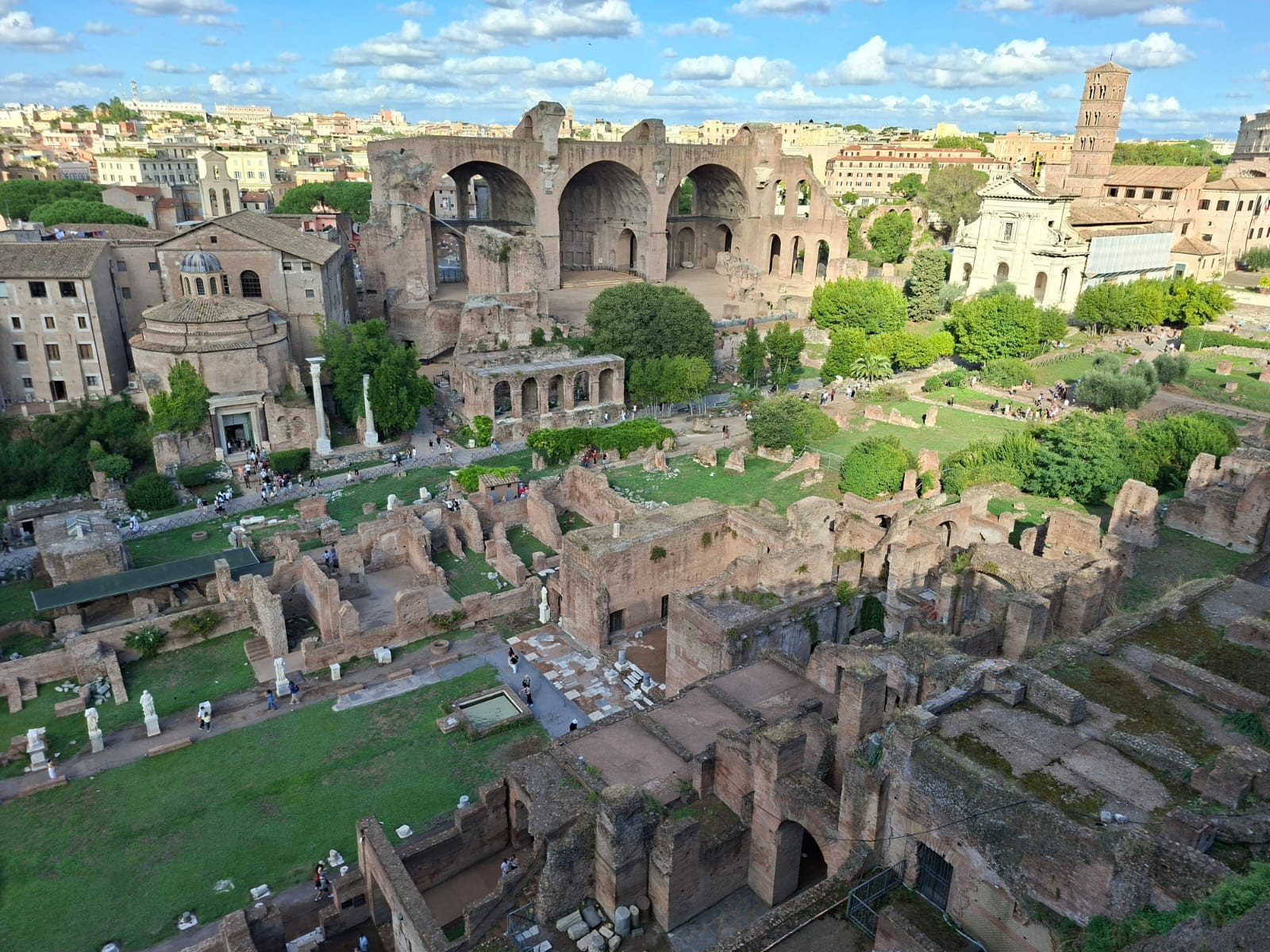
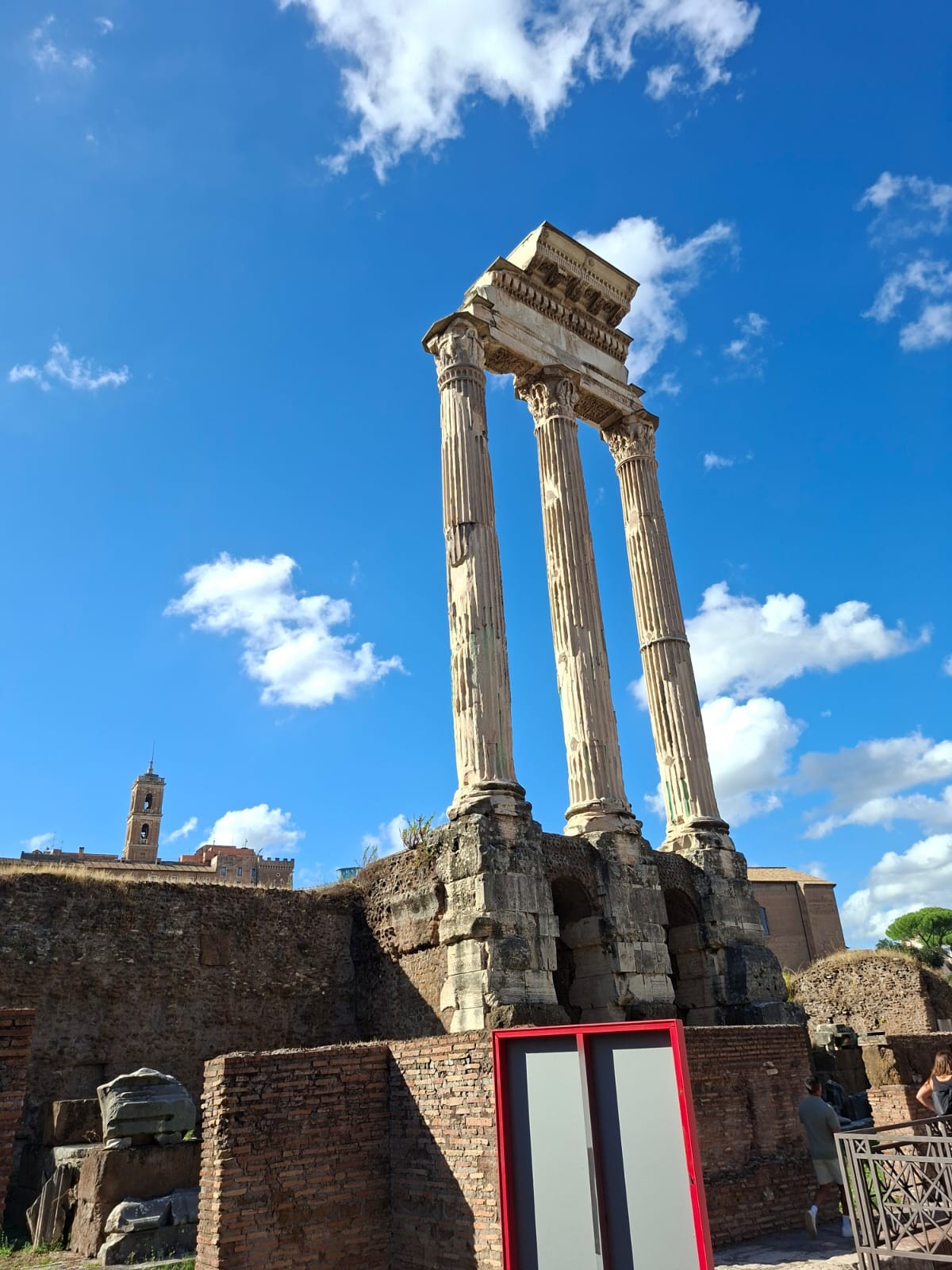
But it wasn’t just the baths that impressed us. Our next stop was the most iconic ancient site—the Colosseum and the nearby Roman Forum. The complex of temples and triumphal arches convinced us of the masterful skills of ancient builders. A surprising element was the preserved temples converted into Christian churches. From the Palatine Hill, we had a perfect view of our final destination—the monumental building named after the colossal statue of Emperor Nero, next to the newly built arena. People simply named it the arena next to the Colossus—Colosseum. There, we completed another part of our research-based learning. The workshop focused on gladiators, especially on the medical care they received after battles. We ended the beautiful day enjoying authentic Italian cuisine with a night view of the Vatican.
Day Two – Castel Sant'Angelo, the Vatican, and a Quick Medical Response
Day two was just as intense and started unexpectedly. On our way to the first site, we witnessed a minor traffic accident between a car and a motorcycle. A few of our group members immediately rushed to the scene, provided first aid using their knowledge from the fall semester, and waited for emergency services to arrive.
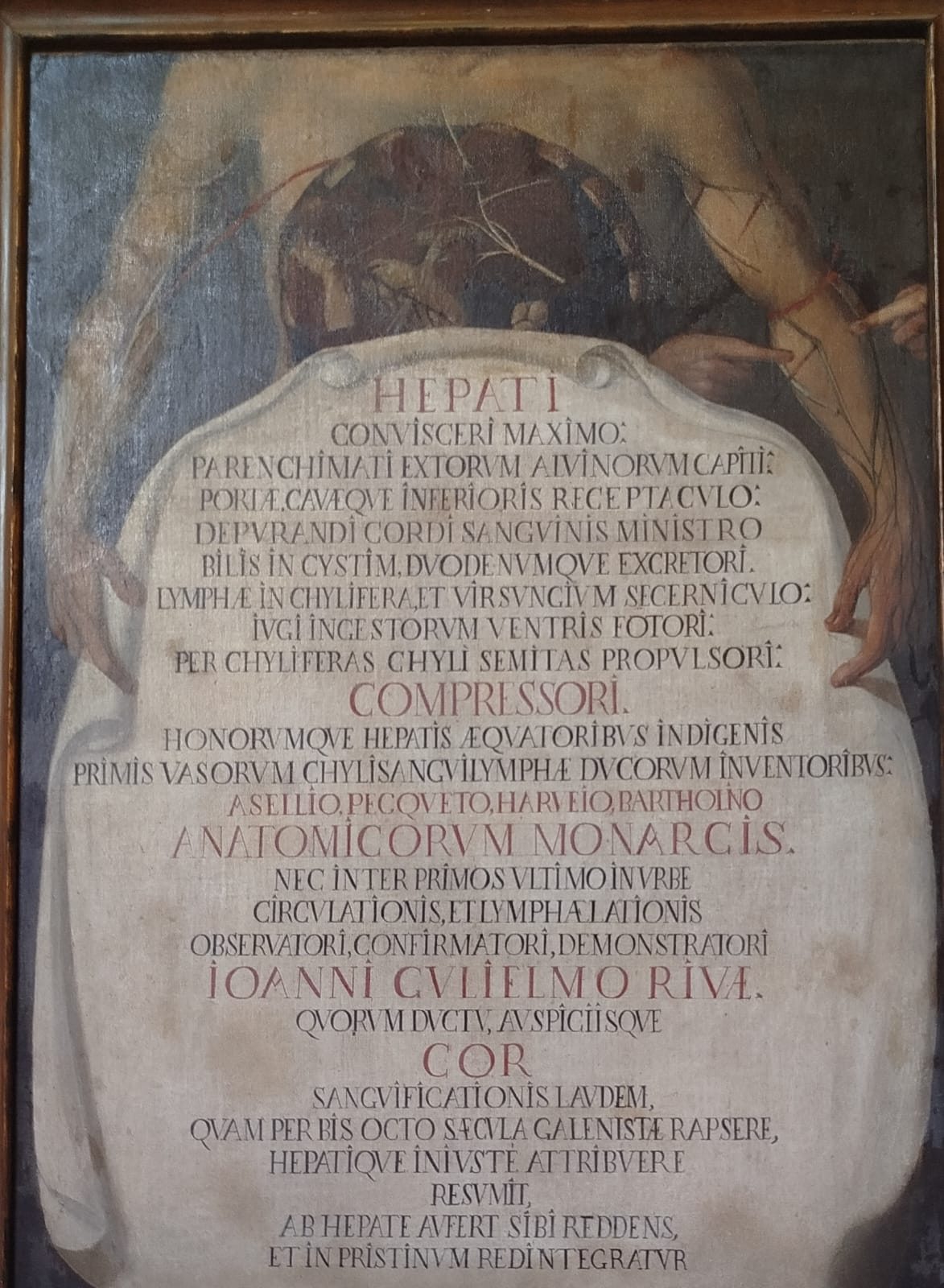
Next was the expected visit to Castel Sant'Angelo, where we admired stunning ceiling frescoes and an exhibition on the history of Rome and the building itself, once Emperor Hadrian's mausoleum. Our tour continued at the National Museum of the History of Medicine, where we explored several rooms with historical artifacts. A local doctor gave an informative talk about pathological-anatomical preparations and 18th-century wax models, Roman surgical tools used in obstetrics, an ancient pharmacy, and an alchemical lab.
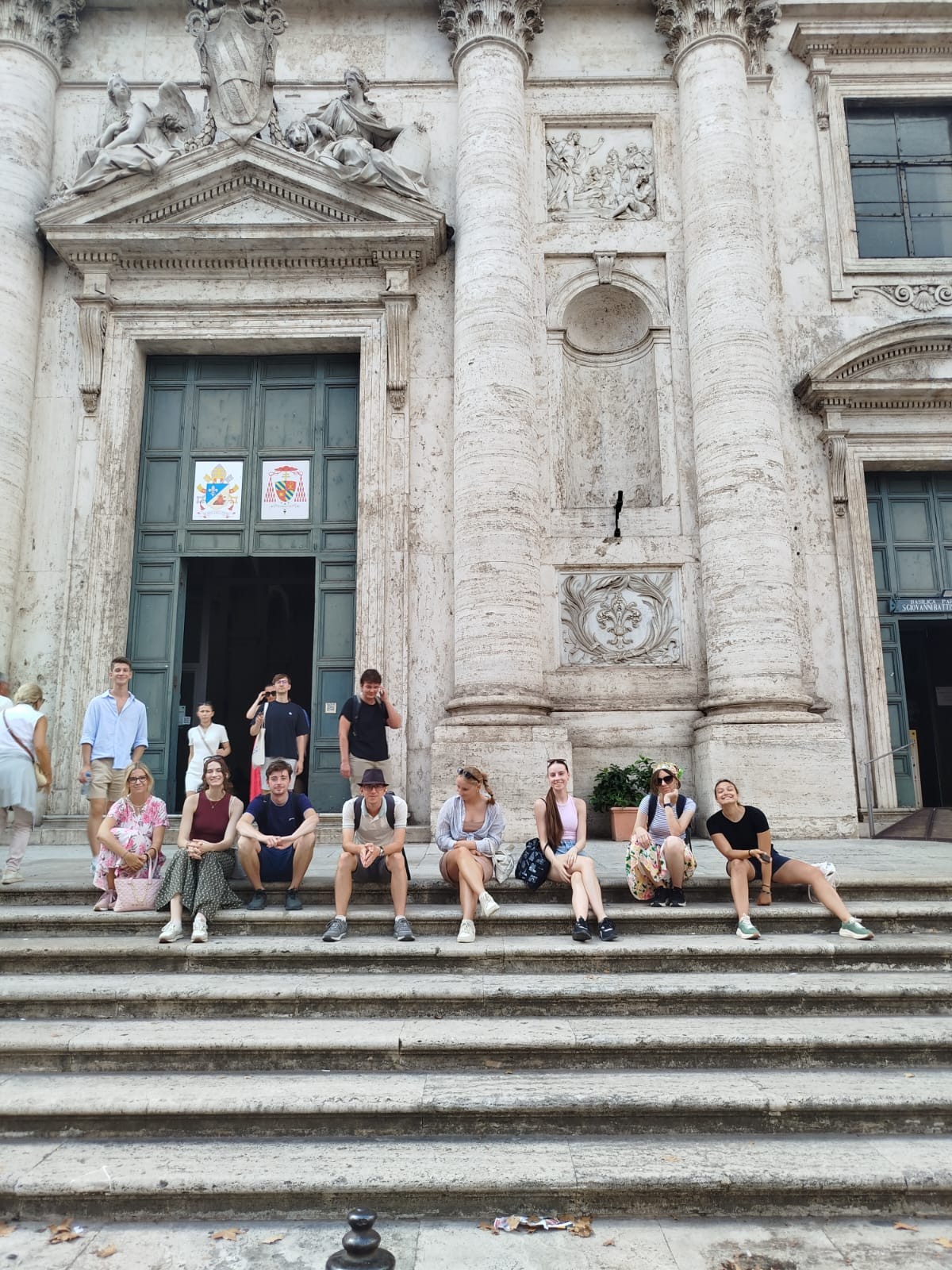
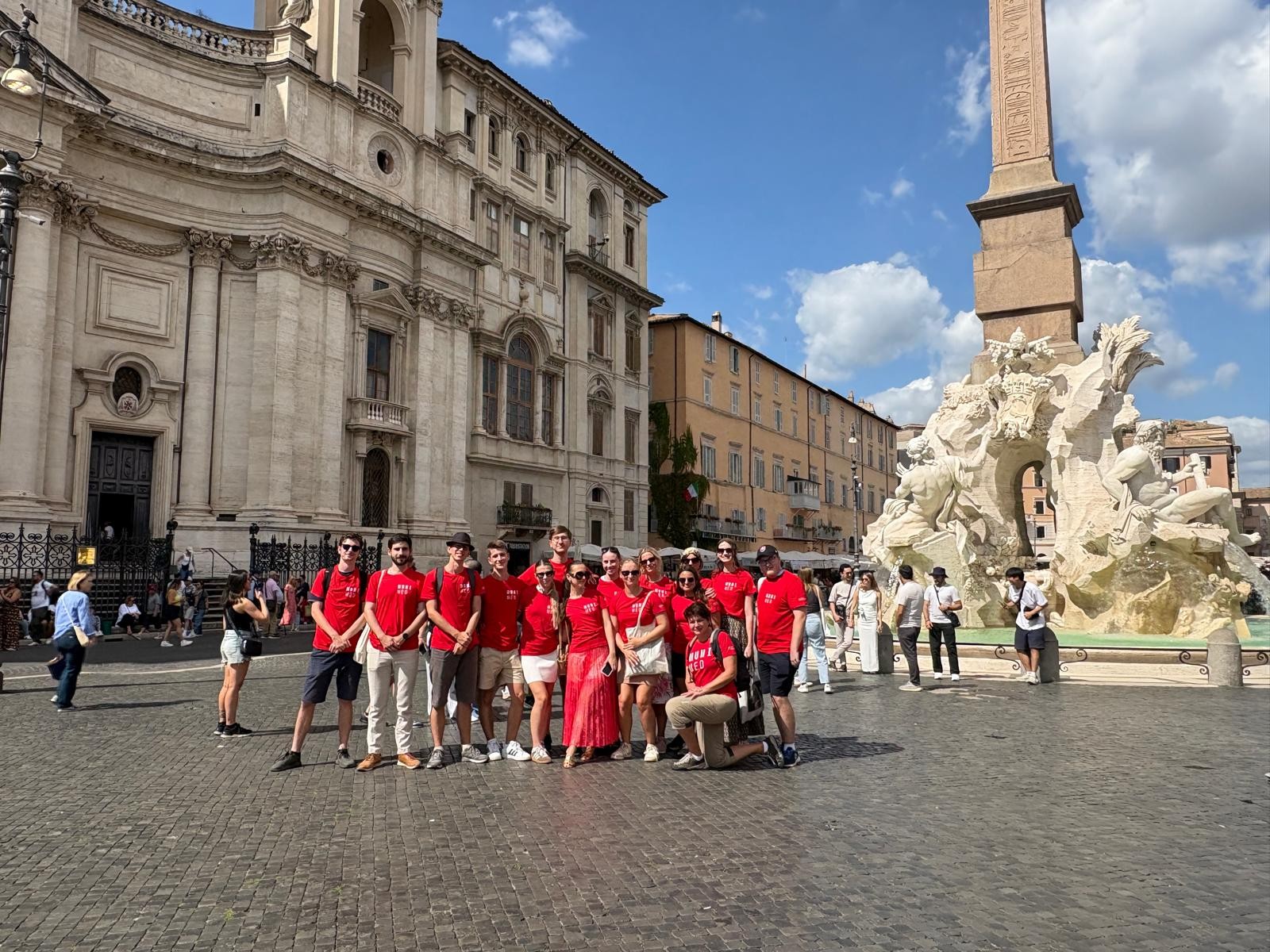
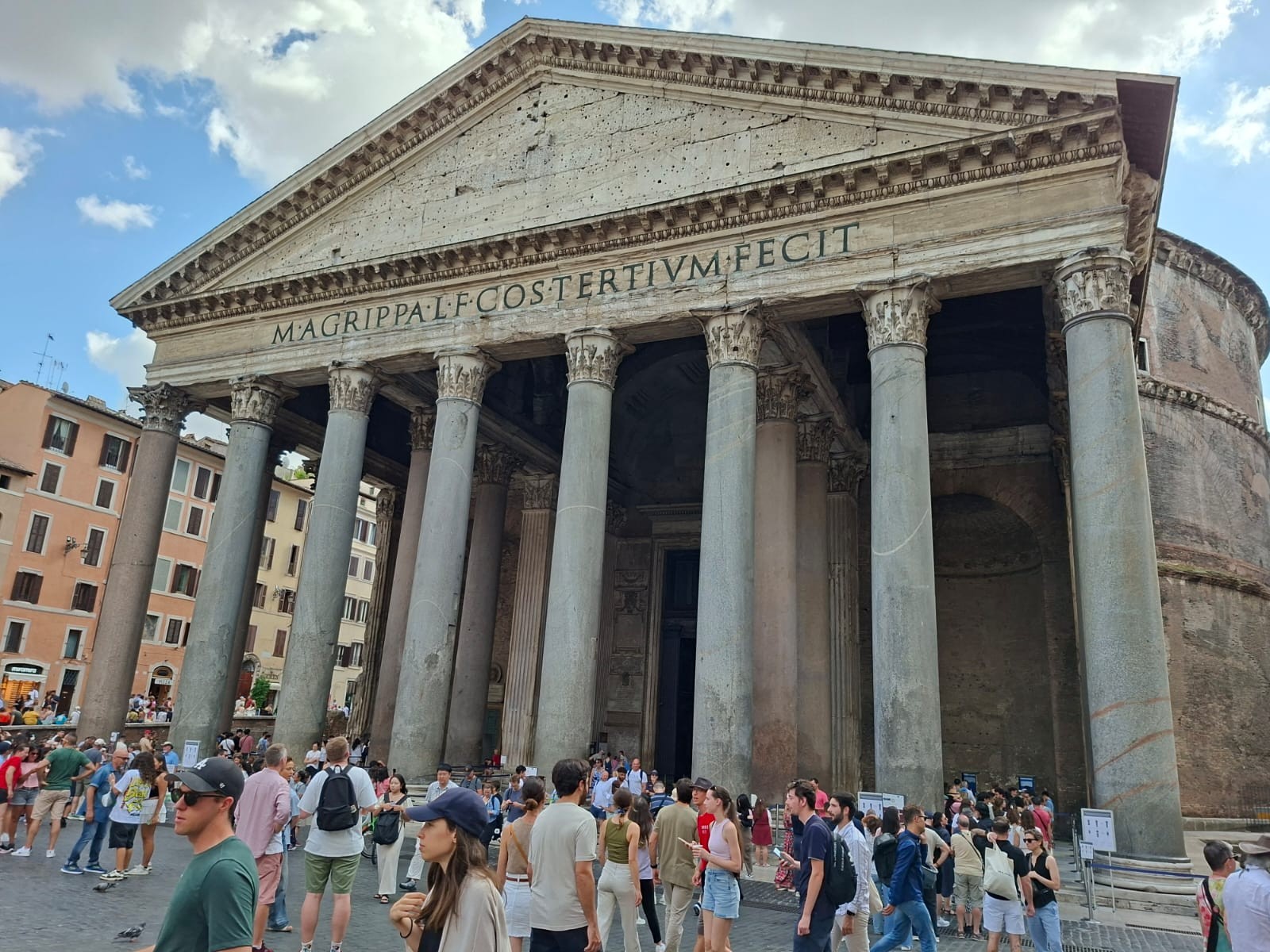
Our journey continued past the Church of St. Louis IX of France to the Fountain of the Four Rivers, representing the world’s major rivers through sculptures of plants and animals from each continent to which papal power extended. Just a short walk brought us to one of the best-preserved ancient Roman monuments, the Pantheon. An interesting fact we learned was that, allegedly, butchers in nearby streets not only sold sausages but also performed cataract surgeries.
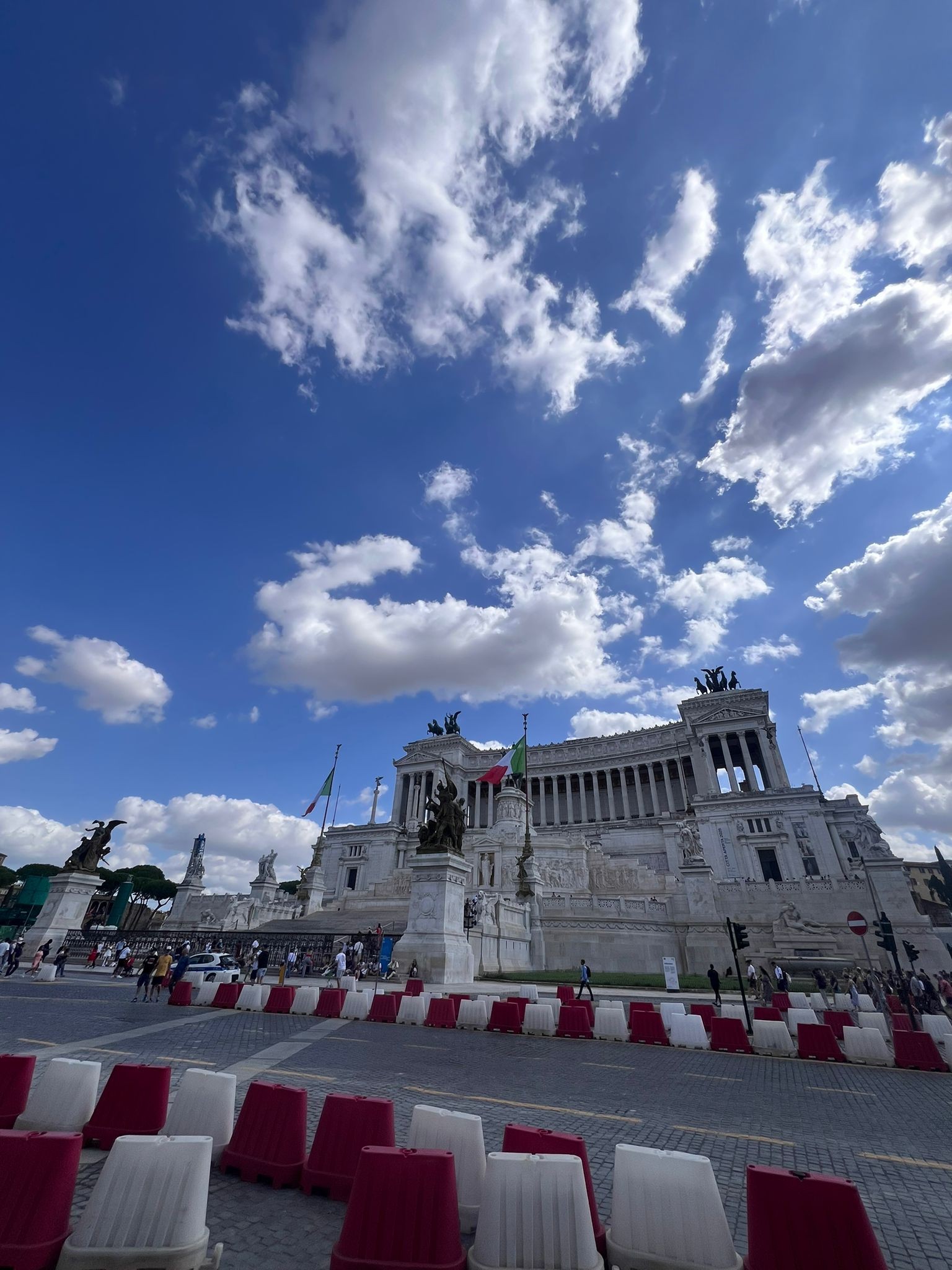
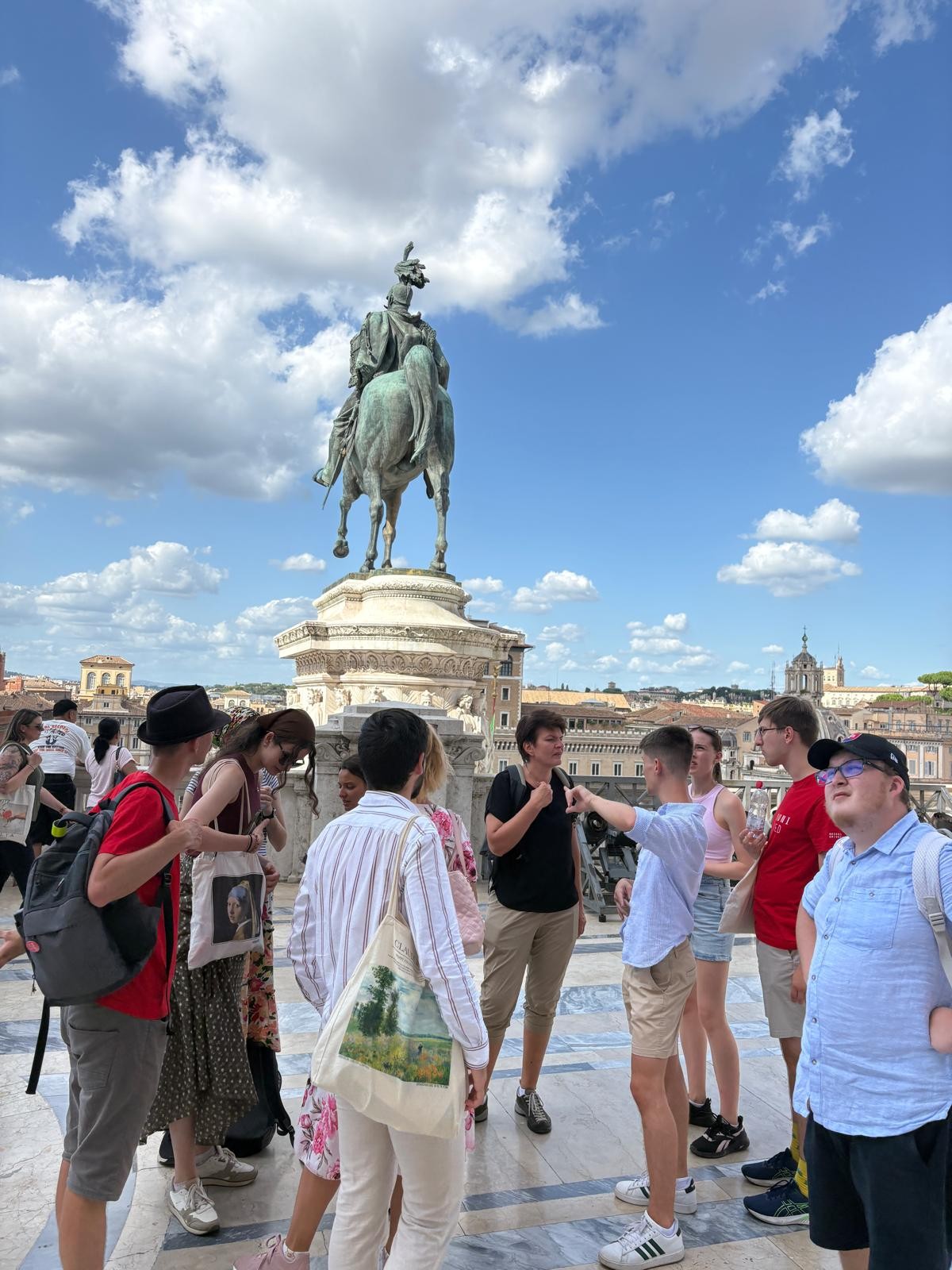
In the afternoon, we headed to the Altar of the Fatherland, built to honor Victor Emmanuel II, Italy's first king and unifier. The evening included a visit to the Vatican—especially St. Peter’s Basilica—a walk up the Spanish Steps, and of course, a stop at the Trevi Fountain.
In vestigiis medicinae antiquae
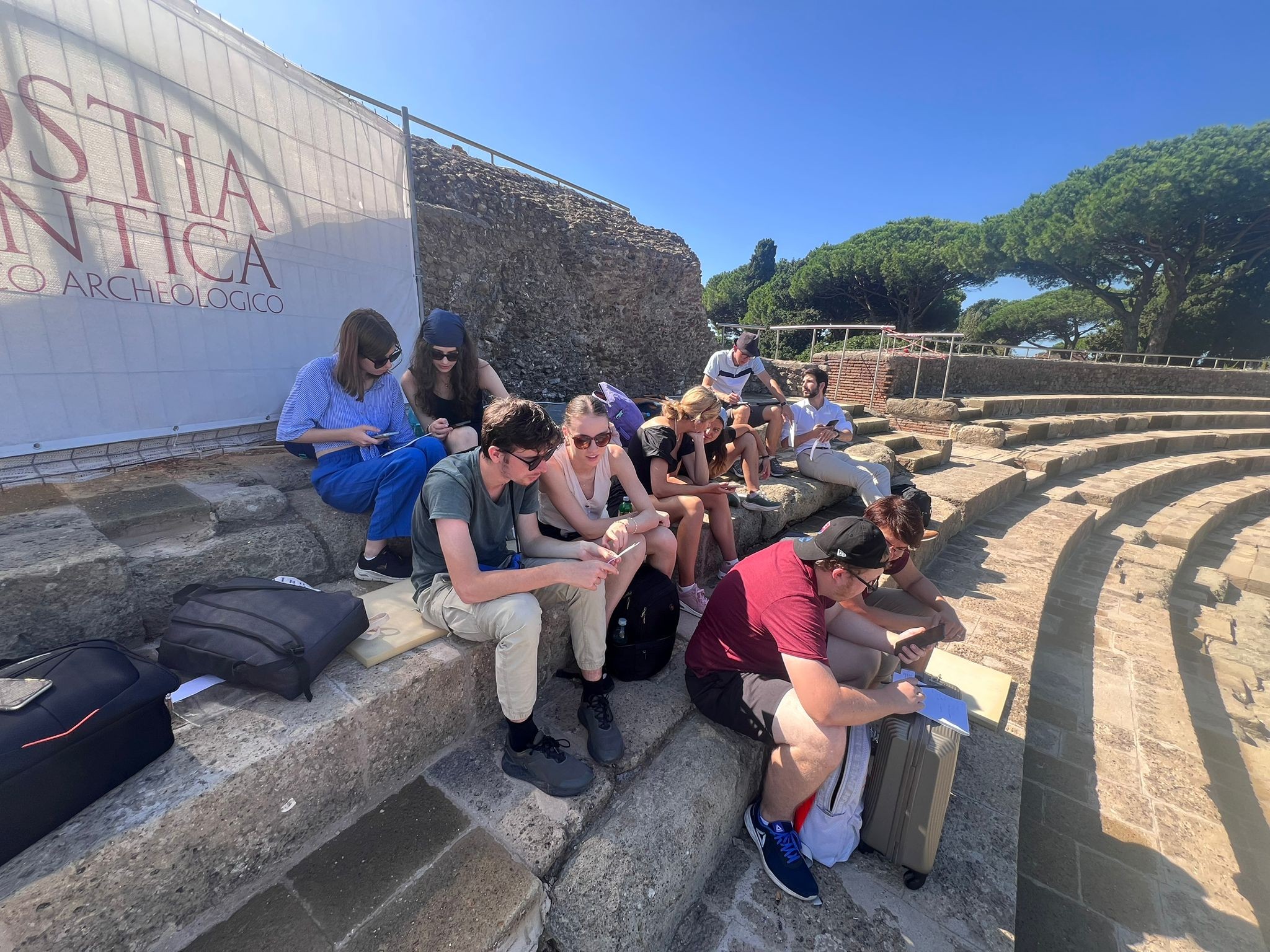
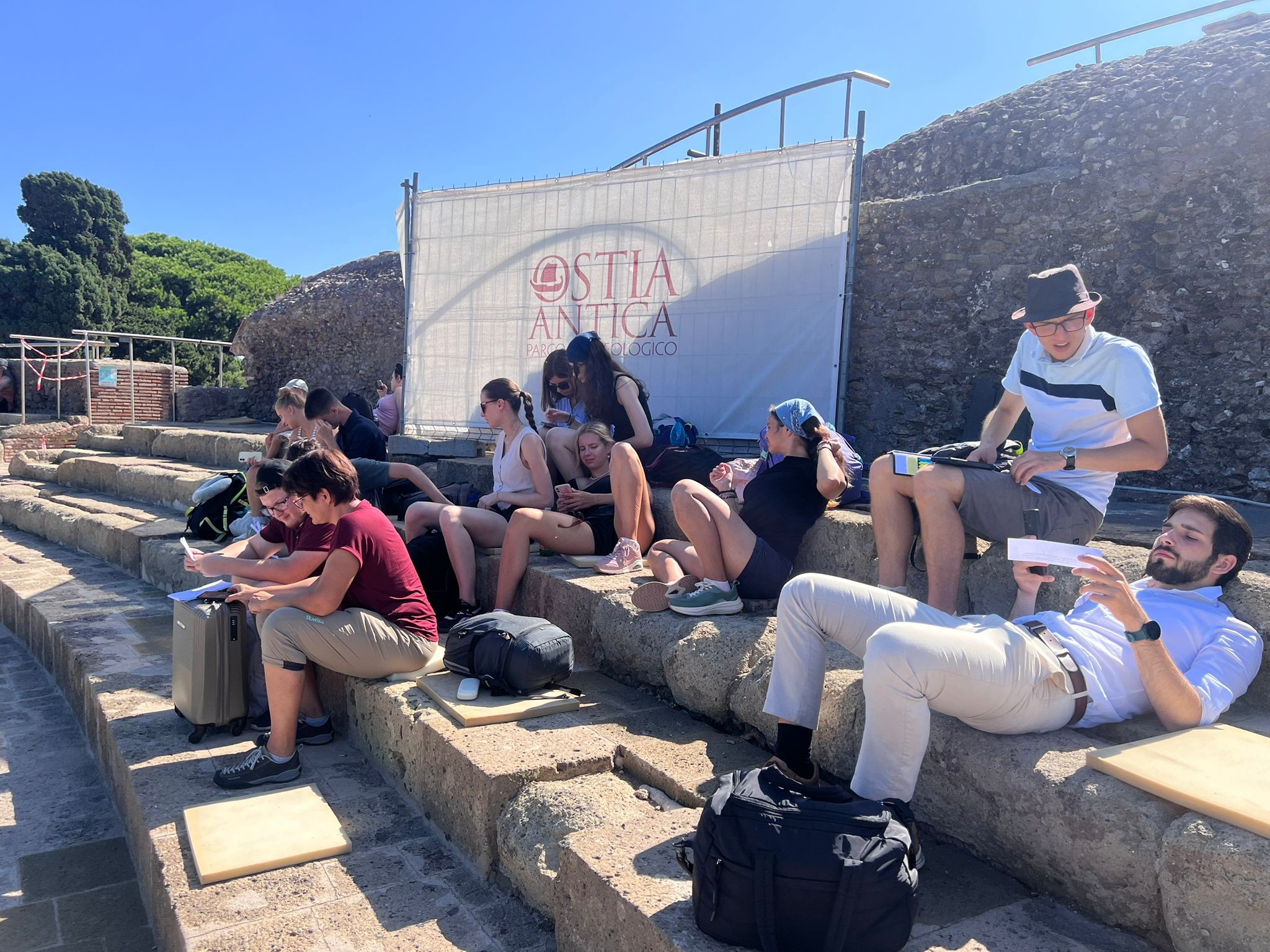
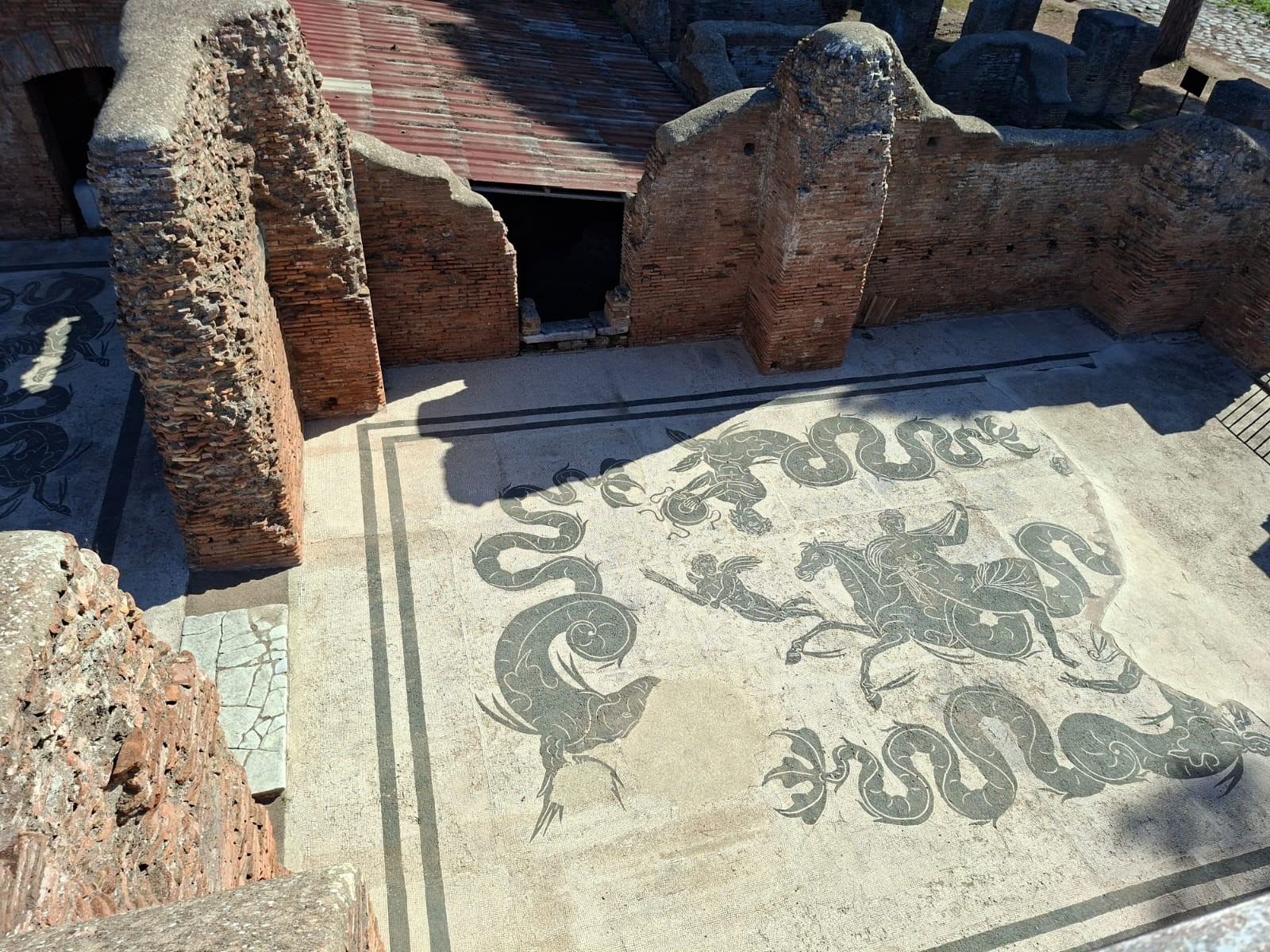
The trip ended with a farewell to summer. Ostia Antica, a well-preserved Roman port city from the Republican and Imperial eras, once housed the office of the quaestor (naval commander), a temple, and a large theater seating 3,000. We used the site to carry out activities focused on ancient anesthetic strategies, treatment methods, obstetrics, and more. Thanks to its proximity to the sea, some students took the chance to cool off in the water at the end.
Looking back, the excursion truly reached its full potential. It combined active relaxation with exploring monuments, historical context, the significance of period medical practices, and the ancient legacy. It also strengthened the bonds within our group. Masaryk University students not only learn theoretically, but also—through collaboration with teachers—actively explore cultural and historical connections in an authentic setting. With this article, we’d like to express our gratitude to Dr. Pořízková, whose effort and willingness made this experience possible.